Choose Quality Air Conditioning Repair on the Sunshine Coast
Keep Your Cool
Is your home or office’s A/C not working the way that it should? For quality air conditioning repair, get in touch with Action Air N Elec today!
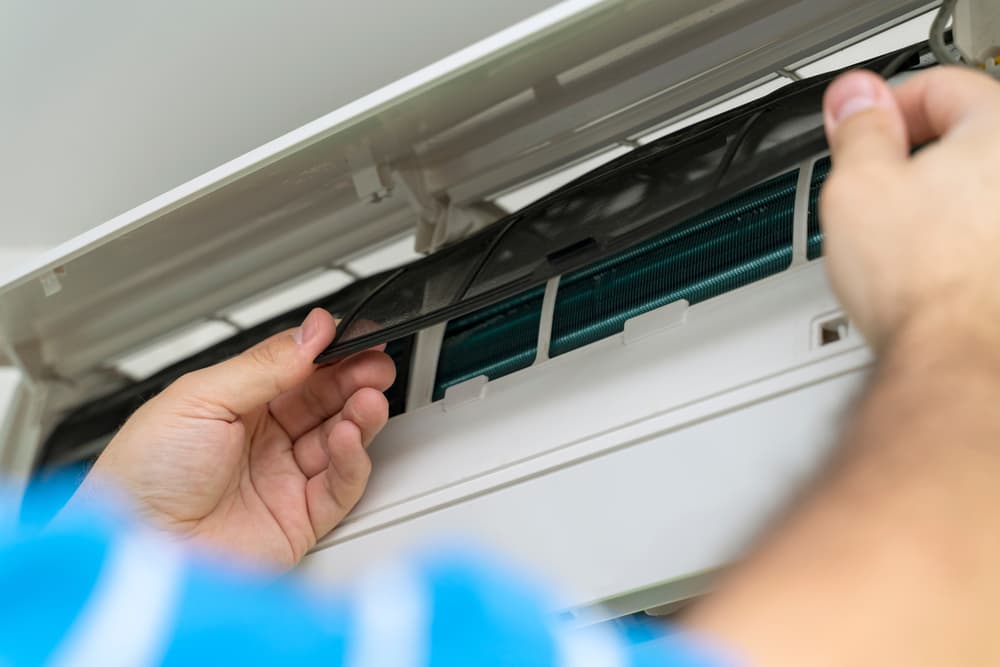
With every air conditioning service, we’ll:
- Check your filters, gas levels & electrical components
- Ensure your heating & cooling is functioning properly
- Monitor your A/C’s airflow
- Ensure your outdoor unit is in good condition
- Ensure your unit’s fans are in perfect working order
Regardless of the brand or age of your air conditioner, our team can provide quality repairs. Whether you own a split system or ducted unit, call us on 0418 881 233 to schedule a service on the Sunshine Coast!
Regular Maintenance Is Key
The Sunny Coast is known for many things: its great community, its sandy beaches, but, most of all, it’s known for the weather! Unless you’re splashing around in the ocean, the heat can be overwhelming. Without a working A/C, it can be difficult to keep cool, even indoors.
To make sure you’re never stuck in this scenario, we recommend maintaining your air conditioning unit annually. Without doing so, you’ll likely be left with dirty filters and blockages. When left unattended, this can lead to greater issues such as water leaks, compressor issues, insufficient cooling and more. Avoid costly repairs down the line by scheduling a general service with us today!
When Your A/C Starts Acting Up
Air conditioning problems aren’t always obvious. A unit might still turn on but struggle to cool the room, cycle too frequently or push your power bills higher than usual. These issues often point to deeper faults—ones that need proper investigation, not guesswork.
We look at your system as a whole, taking into account its age, usage and setup. For older units, we’ll weigh up the cost of repair against the long-term value.
Sometimes it’s a simple fix, sometimes it’s time for a chat about replacement. Either way, you’ll get straight answers and the service to match.
Frequently Asked Questions
What kinds of faults are more common in areas with high humidity or salt air?
Systems exposed to salt air or humidity are more prone to corrosion and moisture-related damage. Outdoor units can rust faster, especially around the coils and terminals, which affects efficiency and reliability.
High humidity can also lead to blocked drains, mould inside the unit and reduced airflow. These issues don’t always cause immediate failure but can build up quietly over time.
If your system’s located near the coast or in a damp area, it’s worth having it checked for early signs of corrosion or water damage—even if it still seems to be running.
Is repairing an older air conditioner worth it, or should I replace it?
There’s no one-size-fits-all answer—it depends on the fault, the system’s age and how well it’s been maintained. Some older units can run reliably with minor repairs, especially if parts are still available.
But as systems age, they often lose efficiency, leading to higher running costs and more frequent issues.
A good technician will weigh up the cost of repair versus the long-term benefit, factoring in the unit’s current performance and any signs of wear. If breakdowns are becoming more frequent, it may be more cost-effective to consider replacement instead.
Why is my system running but not cooling properly?
A system that powers on but struggles to cool is a common issue—and usually a sign something’s not quite right. Low refrigerant, a blocked coil, faulty sensors or airflow restrictions could all be to blame. Sometimes it’s a maintenance issue, like clogged filters or a blocked drain.
In other cases, there’s a mechanical fault that’s limiting performance without triggering a complete shutdown. Because the unit’s still running, the problem can go unnoticed for weeks.
A proper inspection looks beyond the basics to find what’s stopping the system from cooling as it should.
Could an underperforming system increase my power bills?
Yes. If your unit is working harder than it should—due to a blocked filter, worn component or failing sensor—it’s likely to run longer to achieve the same result. That added strain increases energy use, even if the system hasn’t technically “broken down.”
You might not notice the drop in performance right away, but you’ll often see it in your electricity bill. Repairs focused on restoring efficiency—not just functionality—can help bring those costs back under control.
It’s one of the main reasons regular servicing and timely repairs are worth considering.